Loading...
Serving Redding, CA and surrounding areas. (530) 319-6867
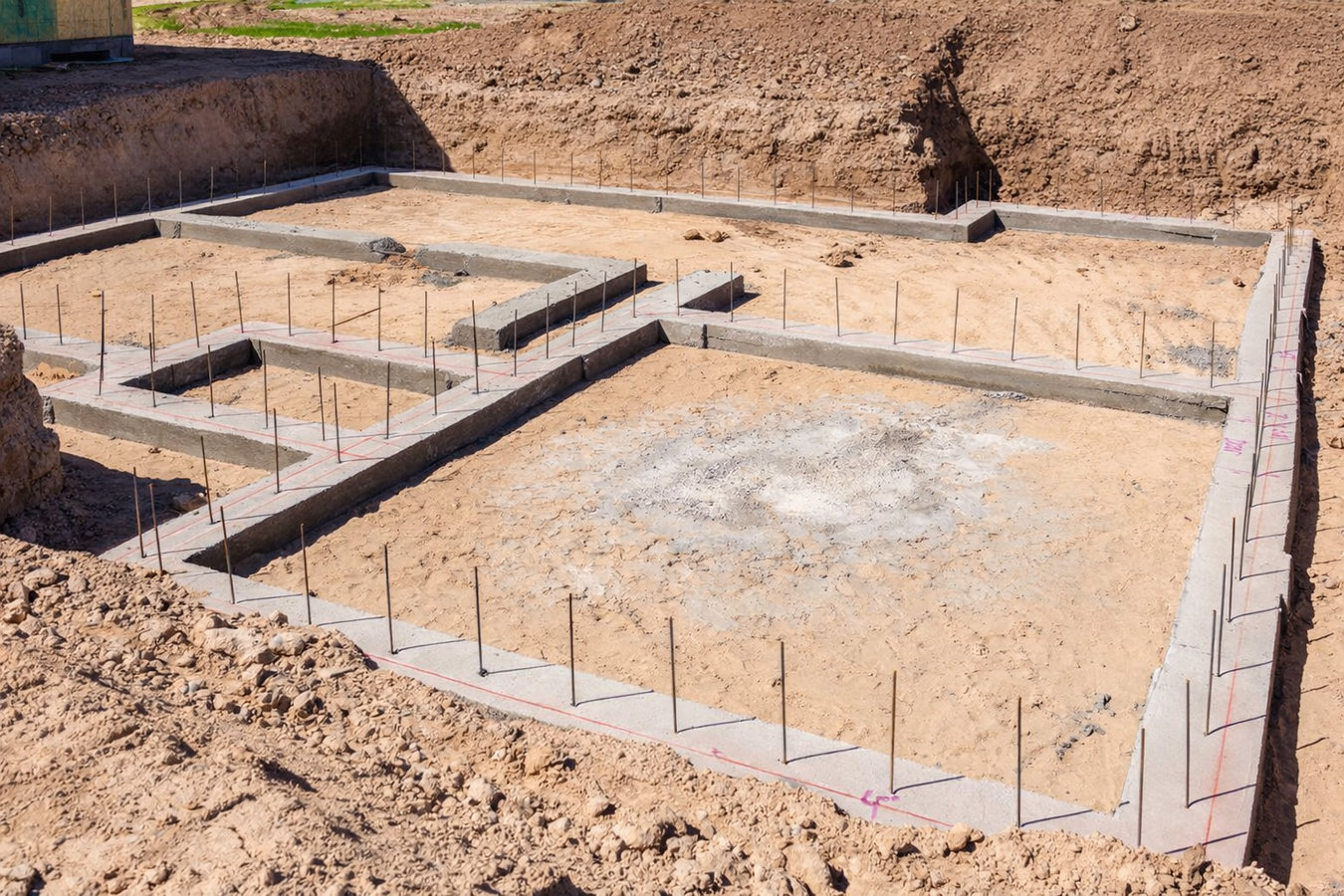
Everything in your home rests on its foundation. We install foundations in Redding that are built for local clay soils, California seismic requirements, and extreme summer heat.
Foundation installation in Redding covers excavation, forming, reinforcement, and the concrete pour itself - most new residential foundations take one to three weeks of active work, with permit review and a post-pour curing period adding additional time before framing can begin.
Your foundation is the concrete base that holds your entire home off the ground and transfers its weight safely into the soil below. Without a solid foundation, walls crack, doors stick, and floors shift - problems that get expensive fast. Whether you are building a new home, adding a major room addition, or constructing an accessory dwelling unit in Redding, foundation installation is the first and most critical step.
Many homeowners in Redding who are building new structures start by asking about slab foundation building - a flat concrete pad poured directly on the ground - which is the most common foundation type in this area. Full foundation installation covers larger and more complex projects where excavation depth, seismic reinforcement, and drainage design go beyond a standard residential slab.
Diagonal cracks that start at the corners of door frames or window openings are a clear sign that your foundation is moving unevenly. In Redding, this often happens because the clay-heavy soil under the home swells during winter rains and shrinks back in the long dry summer - a cycle that stresses the foundation year after year. If you see these cracks widening, it is worth having a professional take a look.
When a foundation shifts, the frame of your home shifts with it - and doors and windows are usually the first place you notice. If a door that used to swing freely now drags on the floor, or a window takes effort to open, the cause may be below the floor and not in the door itself. This symptom is especially common in older Redding homes after a wet winter followed by a hot, dry summer.
New gaps or separations where the walls meet the floor or ceiling suggest the structure is moving. This is different from normal settling in a new home - in an established home, new gaps are a signal worth investigating. In Redding's climate, where soil can shift significantly between wet and dry seasons, these gaps can appear gradually over several years.
Redding gets most of its rain between November and March. If water pools against the base of your home after a storm and does not drain away within a few hours, the soil grading or drainage around your foundation may be failing. Over time, water sitting against a foundation causes erosion and moisture intrusion - and in older Redding homes, deterioration of the concrete itself.
We manage the complete foundation installation process - from the initial site assessment through the City of Redding permit, excavation, forming, reinforcement placement, the pour, and the final city inspection. California building code requires foundations in this region to meet seismic design standards, which means more steel reinforcement and specific anchor bolt placement compared to lower-risk states. We build to those standards on every job. For projects that also require a concrete parking area or exterior hardscape around the new structure, we can coordinate that work in the same project to reduce total cost and minimize site disruption.
Drainage is treated as part of the foundation design, not an afterthought. The soil around your foundation must slope away from the house, and any drainage systems needed to move water away from the perimeter are installed before backfill. Redding's rainy season can send significant water toward a foundation in a short period of time - proper grading from day one prevents moisture problems from developing over the years that follow.
Suits new residential construction where the entire foundation system - slab, footings, and anchor bolts - must be built before framing begins.
Suits homeowners or builders who prefer a raised foundation with a crawl space for utility access, common in some older Redding neighborhoods.
Suits homeowners adding a room addition or accessory dwelling unit where a new foundation section must connect to or complement the existing structure.
Suits any Redding project that must meet California's earthquake design requirements for rebar spacing and anchor bolt placement.
Suits properties where water pooling near the base of the home is already causing erosion, moisture intrusion, or concrete deterioration.
Suits homeowners who need a professional evaluation of soil conditions and site drainage before finalizing foundation design and pricing.
Much of the Redding area sits on expansive clay soils that swell when wet and shrink when dry - a cycle that puts constant pressure on foundations from below. This is one reason foundation problems are more common in Shasta County than in areas with stable sandy soils. A foundation designed without accounting for that movement will show cracks and shifts within a few years. Before installation begins, assessing the soil conditions on your specific lot helps us design a foundation that handles the local ground rather than fighting it. The California Department of Housing and Community Development sets the building standards that apply to all foundation work in the state, including the seismic requirements that make California foundations more heavily reinforced than those in most other parts of the country.
Summer heat also affects the pour and curing process in ways that out-of-area contractors often underestimate. Redding regularly sees temperatures above 105 degrees from June through September, and concrete that dries too fast at the surface ends up weaker than it needs to be. We time our pours and manage curing conditions to protect every foundation against that risk. We serve homeowners in Redding and across the region, including Paradise and Anderson, where soil conditions and permitting requirements follow the same Northern California patterns.
We will ask basic questions about your project - size of the home or structure, foundation type, and whether you have an existing structure or are starting fresh. Most projects get a response within one business day. We do not give firm numbers over the phone without seeing the site, because soil conditions and access in this area vary enough that phone estimates are rarely accurate.
We walk your property, look at the slope, soil type, and drainage conditions, and assess any site access challenges before putting together a written estimate. On some lots - particularly those with clay-heavy soils common in the Redding area - we may recommend a soil report before finalizing the foundation design. Our estimate breaks out every cost line so you can compare bids clearly.
We pull the building permit from the City of Redding before any digging begins. Once approved, the crew excavates to the required depth, sets up forms, and places the steel reinforcing bars. A city inspector visits at this stage to verify everything before the pour - this inspection is required and it protects you.
Concrete trucks arrive and the pour happens - almost always early morning in summer to avoid peak heat. After the concrete sets, the forms come off and the curing period begins. We keep the foundation moist during curing in Redding's dry heat. Once the final city inspection passes, we backfill and grade the soil away from the house, and the site is ready for framing.
Free on-site estimate, no obligation. We handle the permit and schedule every required inspection from start to finish.
(530) 319-6867Northern California is a seismically active region, and California building code requires foundations to be reinforced for earthquake forces - more rebar and specific anchor bolt placement compared to lower-risk states. We build to that standard on every project, and we design slab thickness and drainage for the expansive clay soils common in Shasta County.
We have installed foundations across 12 cities in Northern California, from Redding through the Sacramento Valley. That track record means we have already worked through most of the soil, weather, and access variables that come up in this region - and we know how to manage them without pushing your timeline or budget off track.
We submit the City of Redding building permit before any digging starts and coordinate every required inspection ourselves. A failed inspection can push your project back by weeks and cost money you did not budget for. We do not cut the corners that cause those failures.
Water pooling near a foundation after Redding's rainy season is one of the most common causes of long-term foundation problems. We grade the soil and install any needed drainage as part of every installation - not as an add-on after the fact. See the foundation standards maintained by the Portland Cement Association for why drainage is treated as a structural element, not a finishing detail.
A foundation built right the first time saves you from costly corrections down the road. Our combination of local soil knowledge, seismic compliance, and disciplined permit management is what makes the difference between a foundation that holds and one that causes problems years later.
Durable concrete parking surfaces for commercial and residential properties, designed to handle Redding's heat and traffic loads without premature cracking.
Learn moreResidential slab foundations for homes, garages, and ADUs, poured with hot-weather techniques and reinforced for Redding's clay-heavy soil conditions.
Learn morePermit timelines are longer in busy season - call now to lock in your start date and get a free on-site estimate before the schedule fills up.