Loading...
Serving Redding, CA and surrounding areas. (530) 319-6867
Footings that are not built for Redding clay soils will shift and crack. Get footings that are sized, reinforced, and inspected correctly the first time.
Concrete footings in Redding involve excavating to the required depth, placing steel reinforcement, and pouring a concrete pad that holds your deck, addition, or outbuilding safely in place - most residential projects take one to three days of active work, with permit review and curing time adding to the overall schedule.
A footing is the underground base that keeps everything above it stable. Think of it as the feet of a table - if they shift, the whole structure shifts. In Redding, where clay soils expand and contract with the wet and dry seasons, footings that are not properly sized and reinforced will heave, tilt, or crack over time. Concrete footings in Redding need to account for those local soil conditions from the design stage, not after problems appear.
If your project also requires a larger poured base - like a full concrete pad for a garage or accessory dwelling unit - ask about foundation installation , which covers that broader scope of work. Many footing projects also benefit from pairing with foundation raising when the existing structure above the footings has already shifted and needs to be restored to level.
If you can see a gap opening between your deck and the exterior wall, or the deck surface has started to tilt, the footings underneath may have shifted. In Redding, this often happens after a wet winter followed by a hot dry summer - the clay soil expands and contracts, pushing footings that were not deep or wide enough out of position. A shifting deck is not just cosmetic; it can become a safety hazard over time.
Hairline cracks in a slab are common and often harmless, but wide or diagonal cracks - especially ones that are growing - can signal that a footing below has moved or settled unevenly. Redding's expansive soils make this more likely than in areas with stable sandy or rocky ground. If you see new cracks appearing after a particularly wet winter or a long dry spell, it is worth having a concrete contractor take a look.
Any new structure attached to your home or built on your property needs proper footings before anything else goes up. The City of Redding requires permitted footing work for decks, additions, and outbuildings - and skipping it can mean tearing out finished work later. If you are in the planning stage for any addition or outbuilding, footings are the first conversation to have with a contractor.
When footings shift, the structure above them shifts with it - and one of the first places you notice is in doors and windows that no longer open and close the way they used to. If multiple doors or windows in the same area of your home started sticking around the same time, especially after a wet season, it is worth investigating whether the footings in that part of the house have moved.
We handle footing projects from the first site visit through the final city inspection. That includes the permit application through the City of Redding Development Services building division, excavation to the required depth, steel reinforcement placement inside the forms, the concrete pour, and coordination with the city inspector who visits before and after the pour. For projects that include foundation raising or structural leveling of the existing home, footing work is typically part of that broader repair process. We assess what is there and recommend only what the project actually requires.
Every footing is sized for the load it needs to carry and the soil conditions on your specific property. In Redding's established neighborhoods - areas built out in the 1950s through the 1970s - existing footings are often shallower and less reinforced than current standards require. If you are adding onto an older home, we will evaluate what is already there and tell you honestly whether it can support the addition or whether supplemental footing work is needed. The American Concrete Institute publishes the industry standards for reinforcement and concrete placement that guide how we design and build every footing.
Suits homeowners building or replacing a deck where the existing footings have shifted or were not sized for the soil conditions.
Suits any addition project where new footings must be designed to support the weight of new framing and integrate with the existing structure.
Suits detached garages, workshops, and storage buildings where a stable, permitted footing is required before the structure goes up.
Suits properties where fence posts keep heaving or loosening in Redding's clay soils and need deeper, properly sized concrete footing work to stay in place.
Suits homeowners building an ADU where footing design must meet current City of Redding structural and permit requirements.
Suits owners of Redding homes built before 1980 where existing footings are too shallow or under-reinforced to support a planned addition.
Redding sits on clay-rich soils across many of its neighborhoods, and that soil does something most homeowners do not expect: it swells in winter when it absorbs rain and shrinks back during the long dry summer. That seasonal movement puts stress on footings from below, year after year. A footing poured to a generic depth with minimal reinforcement will eventually lose the fight. Contractors who work in Redding regularly know to dig deeper, use more steel, and sometimes replace existing soil with stable compacted gravel before the pour. Homeowners in Shasta Lake and Anderson face the same soil conditions - we serve the full region and bring that same local knowledge to every project.
Redding's summer heat adds a second challenge specific to this area. Pouring concrete when temperatures regularly exceed 100 degrees requires careful scheduling and mix management. Concrete that dries too fast at the surface before it has fully cured inside can develop cracks that compromise the footing before it ever carries a load. We schedule summer pours for early morning, use admixtures that slow the setting process, and keep the concrete moist during the critical early days of curing. The Carr Fire rebuilding activity that followed the 2018 fire also increased demand for concrete contractors across the region - which means scheduling ahead matters more than ever for project timelines here.
We respond within one business day and schedule a free on-site visit. Footing work is too site-specific to price accurately over the phone - the contractor needs to see your soil, the structure you are supporting, and the existing conditions. You receive a written estimate that spells out depth, width, reinforcement, and permit fees before any commitment.
We file the permit application with the City of Redding Development Services building division before any digging starts. Plan review typically takes a few business days to two weeks depending on city workload. We track the permit status and notify you when it is approved - you do not need to contact the city yourself.
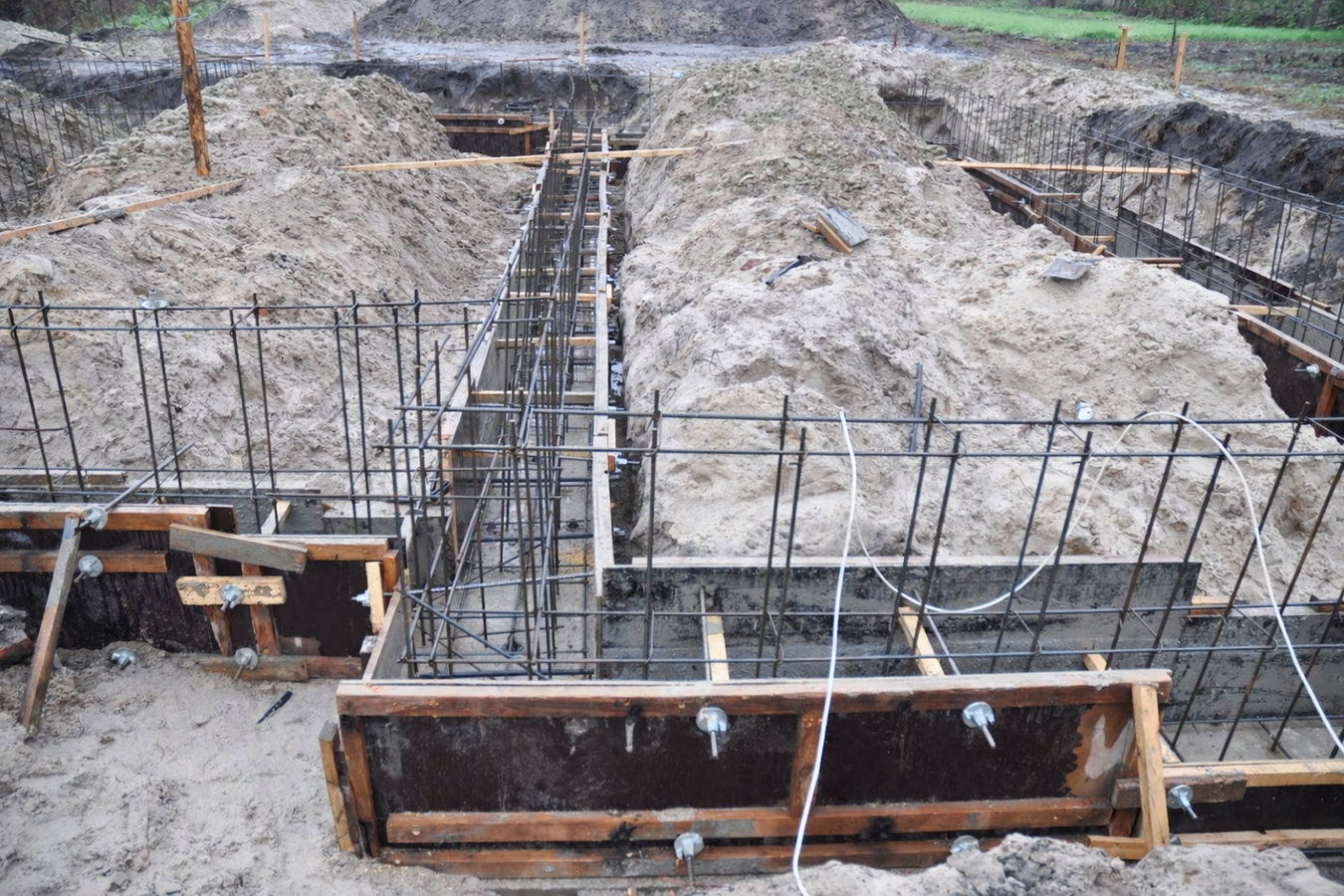
The crew digs to the required depth and sets up forms to shape the concrete. Steel reinforcing bars are placed inside the forms before the pour. A city inspector visits to verify that the depth, width, and reinforcement are correct - this inspection must happen before any concrete is poured, protecting you from hidden problems.
Once the inspection passes, the concrete is poured and finished. In summer, we start early and keep the footing covered and moist afterward to prevent surface cracking. Concrete needs about a week before light loads and closer to 28 days for full strength. A final city inspection closes out the permit and gives you a clean documented record for your property.
Free written estimate. We pull permits and coordinate city inspections from start to finish.
(530) 319-6867We assess your specific lot conditions before finalizing the footing design - depth, width, and reinforcement are all determined by what is actually in the ground on your property. That site-specific approach is what keeps footings from heaving in Redding's seasonal soil movement cycle.
We handle the City of Redding permit application, track approval, coordinate both pre-pour and post-pour inspections, and provide you with a documented record when the job is done. Unpermitted footing work can become a costly problem at sale time - we never suggest cutting that corner.
From June through September, every pour is scheduled for early morning before temperatures peak. We use admixtures that slow curing in high heat and keep the concrete moist for days after the pour. This is standard practice for every Redding summer project, not a special add-on.
We serve 12 cities across Northern California, including communities throughout Shasta County and down into the Sacramento Valley. That range means we have worked on a wide variety of soil conditions and structural challenges - experience that comes directly to your project regardless of where you are in the region.
Every job starts with a site visit and ends with a city inspection. You know what you are getting before work begins, and you have documentation that it was done correctly when it is finished.
Lift and level foundations that have settled or shifted, restoring your home to its correct position and addressing the underlying soil or drainage cause.
Learn moreFull foundation installation for new homes, major additions, and accessory dwelling units, engineered for Redding's seismic requirements and clay-heavy soils.
Learn moreFall is Redding's best window for footing work - cooler temperatures mean better curing conditions. Reach out now before the schedule fills up.